Suche
Suche
Careful restoration with vacuum insulating glass
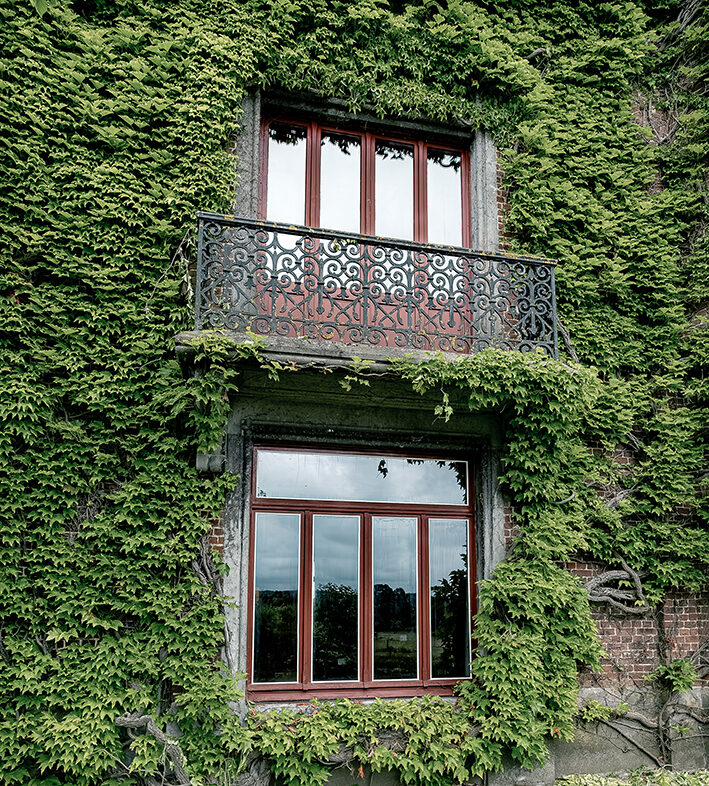
The slim, heat-insulating vacuum insulating glazing fits perfectly into the old oak frames of the idyllic moated castle in West Flanders.

Careful restoration with vacuum insulating glass
Originally built as a wooden castle complex in the late 11th century, Wynendaele Castle was replaced by a walled round castle in the 13th century. In the 12th and 13th centuries, the castle was the seat of the Counts of Flanders and later the scene of important historical events - including the fatal riding accident of the young Mary of Burgundy in the surrounding forests. In the 1870s it was extensively redesigned in a neo-Gothic style by the Matthieu family, who have owned the property since 1833, giving it its current appearance with the medieval-looking towers, battlements, stepped gables and arched gates.
After moving his center of life to West Flanders in 2021, Jérôme Matthieu de Wynendaele faced major challenges. Of course, the dominant theme was energy saving. How could you preserve the spirit of a listed castle measuring more than 2,000 square meters with a history going back around 1,000 years and at the same time reduce energy consumption? "The Flemish Heritage Authority asked us to preserve the existing window frames wherever possible. That's why we needed thermal insulation glass that was just as thin as single glazing," explains the lord of the castle. The choice fell on Fineo vacuum insulating glass, which combines modern energy efficiency with minimal installation height.
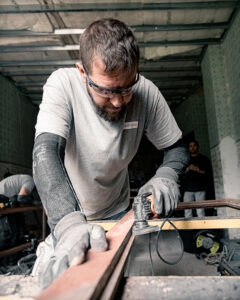
The specialists at RenoWindow see clear advantages in the use of vacuum glass when renovating historical windows. Instead of complete reconstruction, the process focuses on upgrading the existing frames and replacing the glass for energy. Reveals and connections to the masonry remain untouched - a decisive advantage compared to a complete replacement, in which historical-looking windows often have to be individually and handcrafted to measure.
State of the art custom built, traditionally installed
Wynendaele has 203 windows in around 30 different designs. Before replacing the glass, all existing glazing was measured by RenoWindow with millimeter precision. Based on this data, AGC Glass Europe produced around 60 different glass formats in thicknesses between 6.7 and 20.1 millimeters on the state-of-the-art Fineo production line in Lodelinsart, Belgium - each precisely tailored to the respective installation situation. Due to the strict requirements of monument protection, the panes were produced in small formats and inserted into the existing lattice frames in order to preserve the original division. Each window frame was also carefully checked for damage and measured precisely. Seals and fittings were checked and replaced if necessary.
The glass replacement, which lasted around two weeks, was carried out in an old, handcrafted tradition: after milling and cleaning the existing folds, classic linseed oil putty was applied to insert the glasses. Finally, the painted surface was professionally restored. Only in a few cases was it necessary to remove the window sashes in order to be able to carry out certain milling work more efficiently. “Our goal is always to preserve the original aesthetics of the frames and not to use any additional material,” explains Vanassche. “The insulation value and thickness allow us to offer glass replacement while maintaining 100 percent of the aesthetics of the frame.”
Thin vacuum space for high thermal insulation
Roland Skomda, sales manager D-A-CH for Fineo by AGC, explains: “The functional heart of Fineo vacuum glazing is a vacuum space that is just 0.1 millimeters thick between two panes of glass, which ensures high energy efficiency with an extremely slim structure.” The gap reduces heat conduction almost completely and thus ensures particularly efficient thermal insulation. Unlike conventional insulating glazing, where noble gases such as argon or krypton serve as filling, the insulating effect with Fineo is achieved solely through the vacuum. Despite a total glass thickness of just 6.7 to 20.1 millimeters, Fineo achieves thermal insulation values on a par with triple glazing. The heat transfer coefficient (Ug value) is 0.7 W/(m²K) - a significant improvement compared to the single glazing of older models, which typically has a Ug value of around 5.8 W/(m²K).

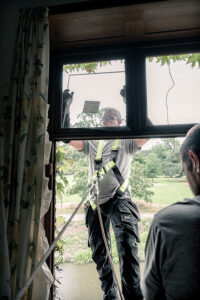
"The project was something special for our team. Working in this historic moated castle was not only technically demanding, but also extremely fulfilling. It's not every day that we are asked not to disturb the tower spirit during our work," says Vannasche with a smile. In order not to hinder the castle's operations, the construction site logistics had to be meticulously planned in advance. Many windows were difficult to access due to the surrounding moat, so a so-called squirrel frame was used.
Sustainability is more than energy efficiency
In addition to its thermal properties, Fineo is characterized by increased light transmission: compared to triple glazing, around 15 percent more daylight enters the interior - an aspect that contributes to the quality of stay, particularly in living and working areas. When it comes to sound insulation, the vacuum glass also achieves just as good values as modern triple glazing - the glass used in Wynendaele achieves values of up to 36 dB. Fineo can also be used flexibly: the standard glass can be adapted to different requirements with additional functions such as sun or sound protection as well as safety glass. For use in a listed context, Fineo Heritage is a variant available in which a combination with Fourcault glass preserves the historical appearance of the original glazing.
(bt)