Suche
Suche
New wooden campus advances wildlife research in Vienna
Research in the green heart of Vienna: A modern wooden building will be built by 2027 that will offer optimal working and teaching conditions for wildlife research and ecology in the future.

New wooden campus advances wildlife research in Vienna
A modern multi-purpose building is being built using wood on around 2,000 square meters and is scheduled to go into operation at the end of 2027. The federal government is investing around 22.1 million euros for this, of which 20 million euros are earmarked for construction and 2.1 million euros for equipment. The project is financed by the BMFWF and is implemented together with BIG, which in turn is responsible for the entire project management. The new building was planned by the Viennese architectural firm Delta Pods Architects.
"At the Research Institute for Wildlife and Ecology [...] we combine basic research with applied projects. [...] This new building will help us to continue our work at the highest level and to gain new insights in wildlife research."Claudia Bieber, head of the Research Institute for Wildlife and Ecology
Here we go
The Research Institute for Wildlife Science and Ecology (FIWI) and the Konrad Lorenz Institute for Comparative Behavioral Research (KLIVV) are located at Wilhelminenberg. The two institutes need more space for scientific research and teaching as well as office space for employees. The groundbreaking ceremony took place together with Science Minister Eva-Maria Holzleitner with Managing Director of BIG Christine Dornaus and the Rector of the University of Veterinary Medicine Vienna Matthias Gauly. In his speech, Gauly thanked the City of Vienna and the Federal Ministry for Women, Science and Research for their support.
“With the construction project at Wilhelminenberg, we are not only strengthening our position as a leading institution in wildlife and behavioral research, but are also making an important contribution to the further development of Vienna as a research location.”Matthias Gauly, Rector of the University of Veterinary Medicine Vienna
Wooden construction and geothermal energy
After completion, the ground floor of the multifunctional building will contain the chemistry laboratories and rooms for teaching as well as a multi-purpose hall; the first floor will contain genetics laboratories and offices. Additional laboratory and technical areas will be located in the basement in the future. Both university institutes use the premises for teaching, science and research. The energy supply for heating and cooling the building is provided by means of Geothermal probes, a compact design ensures low energy consumption. The ceilings and walls of the upper floors are made of wood and the building's wooden facade blends it visually into the surroundings of the Vienna Woods.
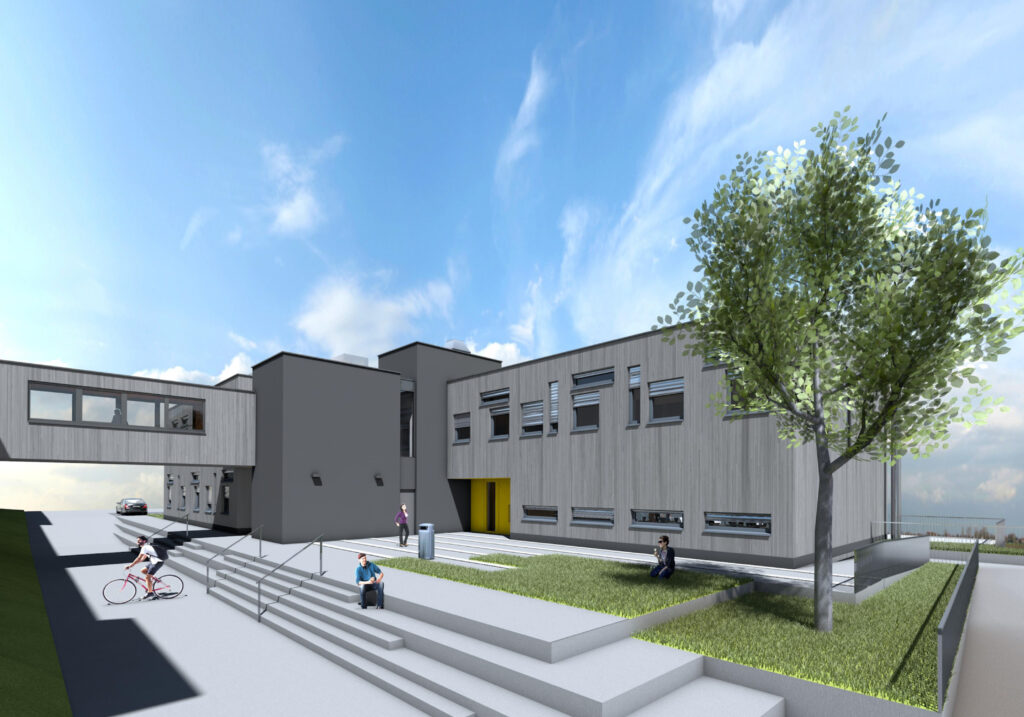
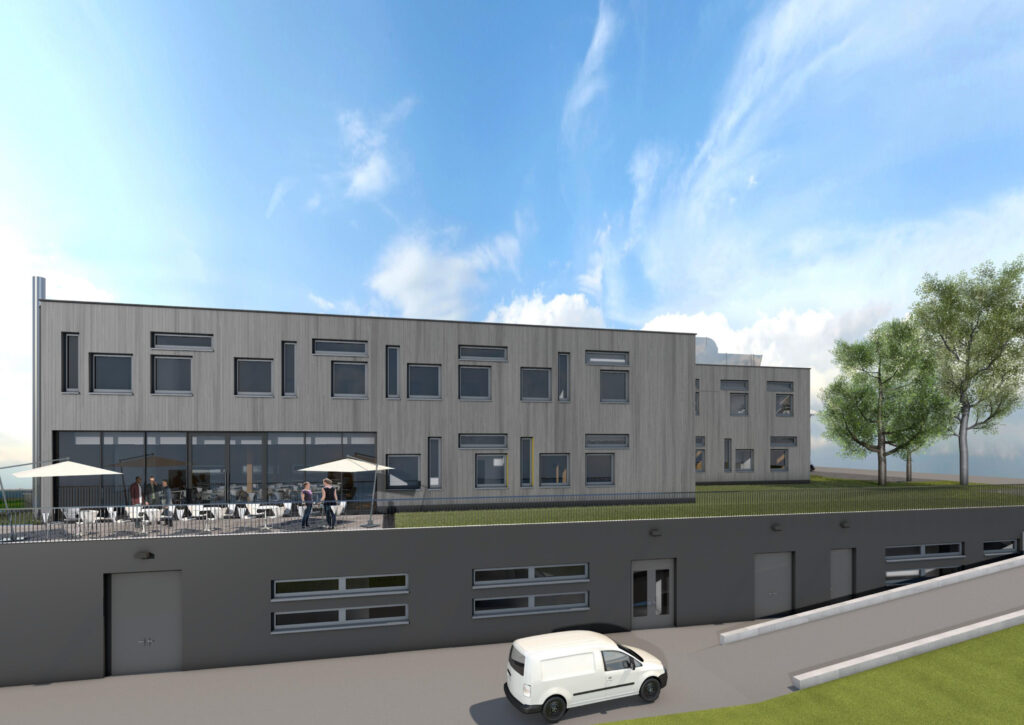
The university site is being developed
The new university building will be constructed in the first construction phase on Wilhelminenberg. In the second construction phase, the existing buildings of the Research Institute for Wildlife and Ecology will be renovated. The new building will be completed in the winter semester of 2027 and handover is expected to take place in 2028.
According to Dornaus, the new building is the first building block for the further development of the research location at Wilhelminenberg. The researchers at the University of Veterinary Medicine Vienna can therefore look forward to an optimal environment on the green Wilhelminenberg. Holzleitner also recognizes the added value of the project, which not only provides students, teachers and researchers with space and infrastructure, but also promotes campus development at Wilhelminenberg.
“With the new building we are strengthening the University of Veterinary Medicine and Vienna as a knowledge and research location in the life sciences.”Eva-Maria Holzleitner, Federal Minister for Women, Science and Research